
















LOCATION
United States
INDUSTRY
Healthcare
PRODUCTS
Rehab products, sports medicine supplies
Productivity
104%
Productivity increase to date (orders picked per hour)
Shipping Rate
95%
Orders shipped within 24 hours (up from 75% pre-automation)
Labor
50%
Reduction in manual labor to achieve same order volumes
Operational Profile
– Randy Jaunzemis, VP, Distribution
Performance Health is North America’s largest rehabilitation products supplier, distributing a wide selection of recovery and therapy goods to healthcare providers, sports programs, and clinics. Its Indianapolis distribution center, at more than 460,000 sq. ft., is the largest in its network and the beating heart of its fulfillment operation.
While a small percentage of oversized goods are drop-shipped, most orders are fulfilled directly from the Indianapolis DC. These orders involve high-volume “eaches,” ranging from small ointment tubes to larger cartons of tape or bandages. With nearly 17,000 SKUs, many of which fit neatly on Chuck AMR shelving, the site faced mounting pressure to keep up with demand.
The facility had been reliant on 140 manual push carts, radio frequency (RF) picking devices, and inefficient packing processes. Associates were walking more than 6.5 miles per shift to complete their routes, often pushing “bread carts” through congested aisles. “We had to grow fast, but expanding the facility or hiring hundreds of new people wasn’t an option,” says Randy Jaunzemis, VP of Distribution.
Pick errors and shipping inefficiencies were on the rise, and service levels were at risk. Orders needed to be picked, packed, and shipped within 24-48 hours, but the manual approach was hitting its limits. It was time to overhaul the pick and pack process - fast.
“We wanted to see where we could automate functions and make the process easier, from onboarding our people to eliminating manual processing that doesn’t drive efficiencies or impact to our customers,” Jaunzemis explains.
Learn how Performance Health is exploring other OIA solutions to partner with Chuck AMR success in their warehouse operations.
Learn how Performance Health utilizes Ocado OMRS Software for analytics and insights to power their fulfillment operation.
Performance Health discusses how Chuck AMR easily integrates with legacy WMS software.
Learn how Chuck AMR can help prevent push and pull injuries throughout the warehouse, keeping associates healthier.
Learn how Chuck AMR can help to improve worker quality and productivity, becoming a collaborative supervisor to complete tasks.
“We print the pack slip at the point of pick. No scanning. No rescanning. It just works.”
– Randy Jaunzemis, VP, Distribution
Performance Health launched “Project Jesse”, named after Olympic sprinter Jesse Owens to reflect the need for speed, with the goal of automating both picking and packing in record time.
They implemented the following solutions from Ocado Intelligent Automation (OIA):
Along with integrating Chuck AMRs with on demand packaging from Packsize:
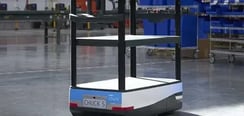
Chuck robots now carry shipping cartons cut to size by Packsize machines. Pickers follow clear on-screen and light-guided instructions, placing items directly into right-sized cartons in shipping sequence.
Jaunzemis recalls the difference: “These systems have taken what I would call the chaos and congestion out of our job. Before, we might have close to 100 bread carts being moved by pickers at any given time, running all over the building, and now we have 32 of OIA’s Chuck AMRs helping to execute those picks, but the congestion and chaos is gone. If you were to walk onto the warehouse floor, you might even think it’s not that busy, because the robots are out helping our pickers in the aisles. The system has really changed the environment that we work in and improved the culture of the workplace.”
Now, Chuck robots lead associates through optimized pick routes, each robot carrying 8 or more orders at once.
For each order, the Fulfillment Execution Software sends package dimensions ahead to a Packsize X5 machine, which cuts a right-sized box with no need for scanning. Each custom-fit box is ready just in time and placed on the Chuck, so items can be picked directly into it in the correct shipping sequence.
“We print the pack slip at the point of pick. No scanning. No rescanning. It just works,” says Ryan Hetzler, Director of Operations, about the seamless process.
Since every box is perfectly sized for its order, up to 20% more orders fit on each Chuck cart, further boosting picking density.
Performance Health needed to grow quickly, but expanding the facility or recruiting hundreds of additional employees was not practical.
Chuck works like a floor supervisor, allocating efficient tasks and reducing unnecessary walking.
The company wanted to automate processes, simplify onboarding and remove manual work that did not improve efficiency or customer outcomes.
The return on investment was clear: better productivity and quality, reduced labour requirements and scalable growth without continually adding employees.
Much of the productivity comes from how the Chuck system controls and optimises travel routes to create dense, efficient picking patterns.
System-directed work removes uncertainty by telling associates where to go next, improving confidence and output.
The solution achieved its return on investment in less than one year and enabled growth without compromising performance.
Although the team planned to introduce six Chucks each week, all 35 were operating by the second week and associates reached the expected pace immediately.
The system is easy to use, and most employees can begin picking efficiently after approximately 15 minutes of training.
Training previously required two to three weeks, whereas the intuitive Chuck workflow now enables new employees to become productive by their second day.

– Randy Jaunzemis, VP, Distribution
Most AMR picking systems lock you into a single picking strategy for the entire warehouse. But Performance Health wanted precision, not a one-size-fits-all setup.
With OMRS Intelligence, they now run two intelligent pick modes concurrently, each one configured aisle-by-aisle based on real-world factors like product velocity, order type, aisle width, and SKU density. Jaunzemis says: “Much of the magic is in the way the Chuck system controls and optimizes the pick paths. It makes for a very dense pick pattern, and that is what drives much of the productivity.”
The OIA team worked closely with Performance Health to assign the right mode to each aisle, optimizing for throughput, predictability, and traffic flow. The two modes deployed were:
This is where associates stick with their bot as it guides them through the aisle, end to end. OMRS Intelligence uses dynamic zoning algorithms to calculate whether switching bots will add measurable value, and only swaps if it does. Handoffs most commonly happen at the end of an aisle.
Sweep powers most of Performance Health’s warehouse, especially in narrow or high-density aisles, and continues to deliver best-in-class results.
In wider aisles with mid-density SKUs, Performance Health uses TagTeam. This is where associates work across multiple bots within the aisle, positioned at traffic-free pick-locations. Like Sweep, TagTeam uses dynamic zoning to decide if and when to switch bots. Handoffs most commonly happen mid-aisle.
This smarter, more controlled flow avoids the chaos of swarm-style systems that flood aisles with bots leading to congestion, blockages, and unpredictable task switching. TagTeam enables controlled movement and intentional handoffs to keep operations smooth, even at scale.
The ability to tailor pick modes by aisle played a key role in delivering the above results. This flexible approach unlocked additional productivity that a one-size-fits-all method would have left on the table. Early indications show this delivered a productivity uplift of around 10%.
“The flexibility of tuning pick modes by aisle gave us options – we weren’t boxed in. We could match the mode to the need in the software, and that made all the difference,” says Hetzler.
This 45-minute webinar features OIA and Performance Health revealing how mobile robotics is transforming warehouse operations.

– Randy Jaunzemis, VP, Distribution
One of the biggest gains from Project Jesse has been the seamless integration of Chuck AMRs with OMRS Intelligence, orchestrating the entire pick-and-pack process.
Chuck AMRs now carry shipping cartons cut to size by Packsize machines, with pickers following clear on-screen and light-guided instructions to place items directly into right-sized cartons in the correct shipping sequence.
Jaunzemis recalls the difference: “These systems have taken what I would call the chaos and congestion out of our job. Before, we might have close to 100 bread carts being moved by pickers at any given time, running all over the building, and now we have 32 of OIA’s Chuck AMRs helping to execute those picks, but the congestion and chaos is gone. If you were to walk onto the warehouse floor, you might even think it’s not that busy, because the robots are out helping our pickers in the aisles. The system has really changed the environment that we work in and improved the culture of the workplace.”
The orchestration between Chuck and Packsize is what makes this possible. OMRS Intelligence sends package dimensions ahead, cutting a right-sized carton with no need for scanning.
Each custom-fit box is ready just in time and placed on the Chuck, so items can be picked directly into it in shipping order.
adds Ryan Hetzler, Director of Operations.
Since every box is perfectly sized, up to 20% more orders fit on each Chuck cart, further boosting density and throughput. More than 3,000 unique box sizes are now produced, eliminating wasted space and void fill.
The impact extends well beyond efficiency: fewer cartons per order, fewer trucks required, and a smaller carbon footprint. “Today, customers receive fewer boxes per order on average, resulting in a more streamlined and efficient delivery experience. From a sustainability perspective, this also translates to fewer truckloads in our distribution network and reduced materials handling on the customer end,” Jaunzemis explains.
– Ryan Hetzler, Director of Operations
With Chuck AMRs and the OIA software in place, Performance Health moved from reactive fulfillment to continuous optimization. OIA’s system now collects and analyzes operational data in real time, automating formerly manual tasks like slotting, routing, and performance planning.
For example, slotting exercises that used to happen once a year in an Excel spreadsheet are now run monthly on-demand. The system highlights top-performing SKUs, recommends ideal pick-front locations, and even calculates the ROI of re-slotting changes, all autonomously.
“We achieved ROI in under a year. Chuck helped us grow without compromise,” notes Jaunzemis, regarding the swift payback on this project.
“Chuck also acts like a floor supervisor, assigning the most efficient tasks and eliminating unnecessary walking,” adds Hetzler, highlighting how intelligent automation optimizes the workforce.
This smarter fulfillment model enabled Performance Health to scale throughput using the same staff and the same facility footprint, even during peak season.
“We just came out of our first peak season with Chuck AMR, and it was like peak didn’t occur. We kept asking ourselves when it was going to get chaotic, and it didn’t happen,”
Jaunzemis reports.
In other words, the system handled peak volumes so well that peak felt no different than any other week.
“The ROI spoke for itself. Productivity gains were clear – higher quality, less labor, and scalable growth without just adding people,” adds Hetzler.
In fact, ROI was officially achieved in less than one year, about six months sooner than initially expected, thanks in part to continuous software updates that kept improving performance.
Performance Health eagerly adopted every new release of the fulfillment software, and saw performance rise with each update. Over 12 months, software enhancements alone delivered a 23% increase in units picked per hour (UPH). As OMRS Intelligence evolved through regular releases, the operation unlocked new capabilities without disruption or additional investment.
The extra picking capacity gained from these software-driven improvements allowed the team to take on new workflows, like putaway and LTL (less-than-truckload) order fulfillment, with the same workforce and infrastructure.
– Ryan Hetzler, Director of Operations
“This isn’t a static solution. The team is constantly pushing innovation. Now we use Chuck for putaway too, which we didn’t even plan for initially. We’re also shifting our LTL shipments onto Chuck. Exception slips now print automatically. I could go on for hours!” says Hetzler, emphasizing how the solution continues to expand in capability over time.
Chuck robots now even assist with handling oversized LTL orders that are too large for standard parcel processes but don’t require a full pallet load, proving the robots aren’t just for small-item picking. All of this was accomplished using the original fleet of 35 Chucks – no additional robots needed.
“That’s taken a truck out of the aisles, and it’s doubled our putaway productivity,” Jaunzemis explains.
– Ryan Hetzler, Director of Operations
The robots not only increased output but also transformed the workplace culture. By taking over the long walks and cognitive load of routing decisions, associates now experience less fatigue and greater job satisfaction.
“The system reduced fatigue, improved pick density, and gave our team confidence,”
says Jaunzemis, reflecting on the workforce benefits.
Instead of rushing around the warehouse, employees can now focus on accurate picking while the automation handles navigation and box prep.
“The system-directed workflow means our team doesn’t waste time wondering what’s next. Chuck tells them where to go. It improves both confidence and output,” Hetzler adds.
The technology not only makes the work easier, but also helps employees feel more successful in their roles.
OIA went further by sending a Chuck to Performance Health weeks ahead of go-live. The early exposure gave associates time to train and build confidence. The result was higher morale, faster adoption, and a smoother launch.
Full deployment was achieved in roughly two weeks, far ahead of schedule, with minimal disruption to ongoing operations.
The solution was intentionally designed for quick deployment, and it paid off:
“We planned a slow rollout, six Chucks per week, but by week two, all 35 were up and running. The team hit their pace right away,”
Hetzler notes on the fast ramp-up.
Importantly, no infrastructure changes were needed to accommodate the robots. “We did not have to change the infrastructure of the building to accommodate the mobile robot fleet,” Jaunzemis confirms.
– Randy Jaunzemis, VP, Distribution
The Chuck system was designed for simplicity. Instead of clunky RF guns and static pick lists, associates now interact with touchscreen tablets and light guidance on the robots.
“It’s a very easy system to use,” says Jaunzemis. “Most people would be picking pretty efficiently with the Chucks after about 15 minutes of training.”
This intuitive design slashed onboarding from two weeks to just two hours. New staff can hit productivity targets by their second day, with no forklift licenses or memorization of function keys required.
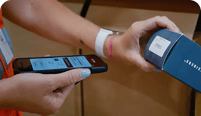
Associates simply badge in to the device and follow visual instructions in their preferred language; they can reach productivity targets by their second day on the job, all without needing forklift licenses or extensive training.
“It’s simple and intuitive. Before Chuck, training took 2–3 weeks. Now new staff are productive by Day 2,” says Hetzler, highlighting the improvement in training efficiency.
Building on the success of Project Jesse, Performance Health has a bold vision for further scaling through full-suite automation. Having seen firsthand how quickly the person-to-goods AMRs and intelligent software delivered ROI, the team is now exploring automation beyond just picking and packing, toward a fully orchestrated end-to-end fulfillment ecosystem.
In particular, they are evaluating OIA’s Porter AMRs to automate heavier case and pallet movement workflows, and the Ocado Storage and Retrieval System (OSRS) to maximize high-density storage and optimize inventory handling. What started with Chuck has unlocked a wider ambition: to streamline the entire operation through a single, integrated automation platform.
“We’re looking at OIA’s Porter AMR and also exploring the OSRS,”
notes Hetzler, indicating their roadmap.
It’s clear that Performance Health now views OIA not just as a vendor, but as a long-term partner in building a future-ready fulfillment strategy.
Let's talk about scalable automation: person-to-goods, goods-to-person, and the intelligent software that powers them both.

Complete the fields below to connect with a member of our sales organization to learn more.